
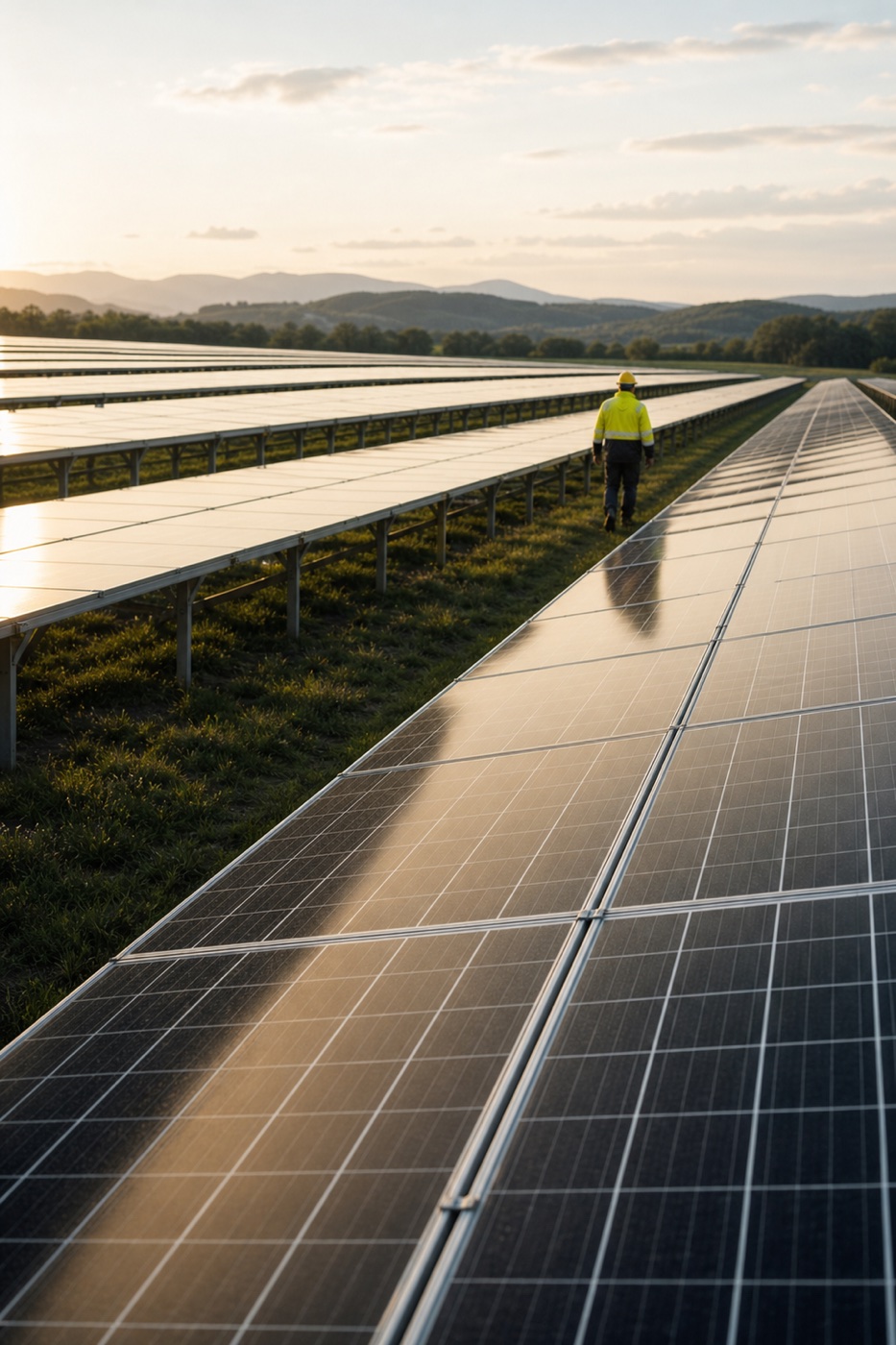
Nemesis Solar carried out a broad construction and commissioning package for a 36 MW solar power plant in Sweden. The project combined mounting structures and photovoltaic modules, cable routes, inverter equipment, control measurements and weather-station installation. Its defining challenge emerged from the terrain: the site occupied a former forest belt with numerous stumps left in the ground, and significant deviations had occurred during earlier drilling and pile installation.
A multidisciplinary installation scope
Our team assembled and installed the steel support structures and photovoltaic modules, laid cable routes, and installed and connected inverter equipment. The scope continued through commissioning, control measurements and installation of the plant’s weather stations.
Coordinating these disciplines meant that the geometry of the supporting structure was not an isolated mechanical issue. Alignment affected module installation, cable organisation and the quality of the completed generating field.
The site constraint: a former forest belt
Numerous stumps remained below and above the working surface. They complicated access and interfered with the drilling and pile-installation process performed before our structural assembly. As a result, the installed pilot piles showed substantial positional deviations.
If transferred directly into the table assembly, those deviations would have distorted the supporting structure and prevented a consistent module plane. Reworking the entire pile field would also have put the construction programme at risk.
Adapting the mounting process on site
The team quickly revised the installation sequence and developed an individual modification of the fastening holes on the load-bearing structures. The work was performed directly on the structures and tailored to the actual position of the installed piles.
This approach created the adjustment needed to compensate for the drilling and pile-position errors while preserving the intended table geometry. Each connection had to solve a local deviation without allowing that correction to accumulate across the row.
Geometry first: rows, tables and module plane
The objective was not simply to make components connect. The finished tables needed correct alignment and the photovoltaic modules had to form a clean, continuous plane. That required systematic control throughout assembly rather than a cosmetic correction at the end.
By combining individual connection adjustments with ongoing geometry checks, the team prevented deviations in the pile field from becoming visible or functional defects in the finished solar array.
Delivered on schedule
The revised method allowed the team to absorb inaccuracies inherited from the earlier drilling and piling stage without compromising the quality of mechanical installation. Structures and modules were completed to the required geometry while the electrical and commissioning scopes progressed with them.
The 36 MW project demonstrates a core Nemesis Solar capability: identifying the practical consequence of a site deviation, engineering a workable installation response and maintaining both quality and schedule across the full assigned scope.
/ FAQ
What caused the pile deviations?
The project was located on a former forest belt with many stumps that had not been removed. These terrain conditions complicated earlier drilling and pile installation, resulting in substantial positional deviations.
How did the team restore the geometry of the solar tables?
Nemesis Solar developed and performed individual modifications to fastening holes on the supporting structures, compensating for actual pile positions while continuously controlling table alignment and the module plane.