
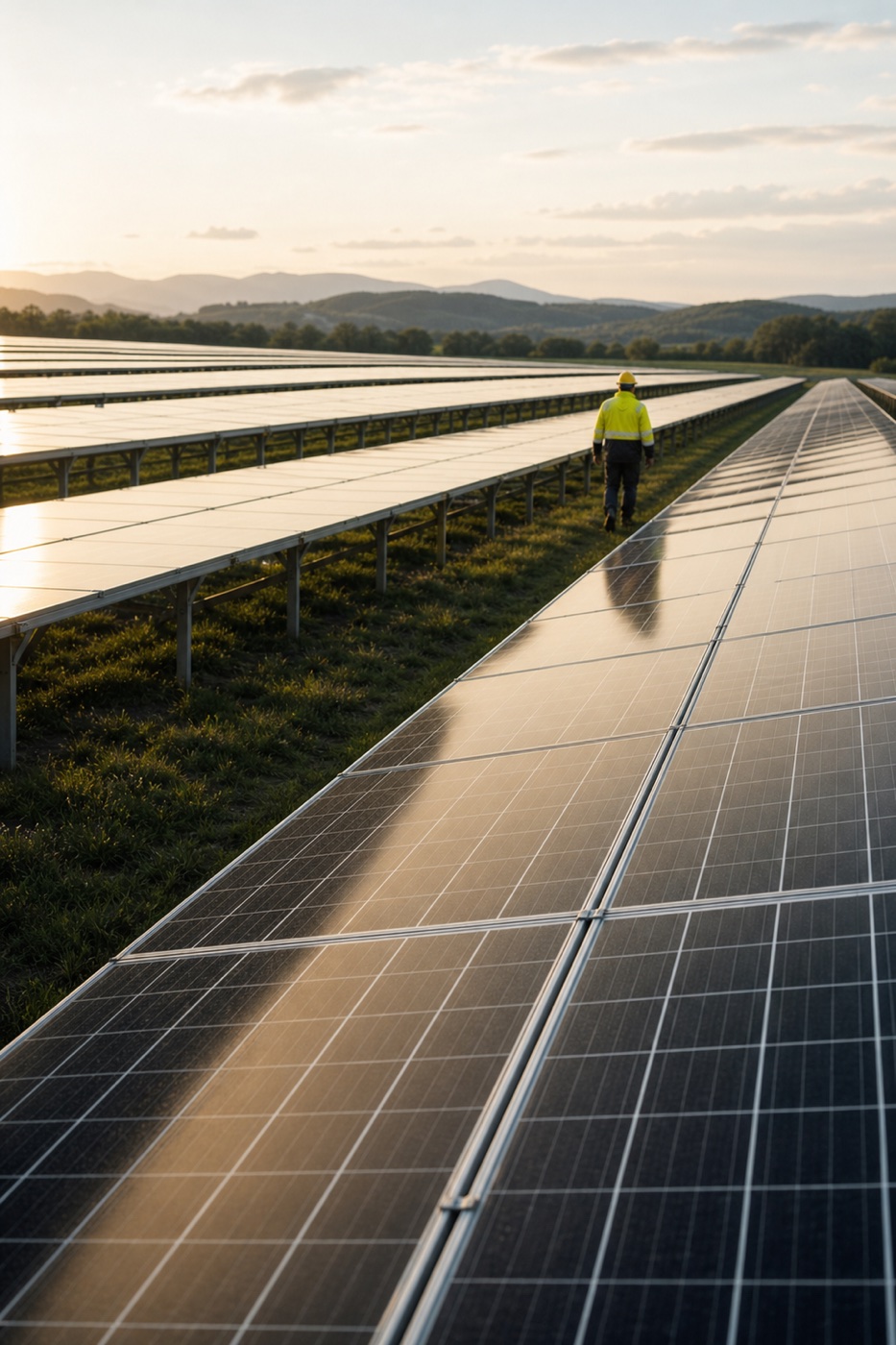
Pile driving sets the geometry and durability of a ground-mounted solar plant. Errors made at this stage travel downstream: misaligned posts slow structure assembly, incorrect embedment can challenge design assumptions, and undocumented deviations become difficult to resolve at handover. A controlled piling package begins before the first production pile enters the ground.
Design the installation from site evidence
Combine the geotechnical investigation with structural loads, pile geometry, corrosion exposure, topography and the mounting-system supplier’s tolerances. Soil can vary inside one site, so the investigation and test locations must represent distinct zones rather than one convenient corner.
Test piles and pull-out or lateral tests verify the proposed embedment and installation method. Results should be reviewed by the responsible designer before mass production starts.
Agree a refusal and deviation procedure
Rock, buried obstructions and dense layers are predictable project risks even when their exact locations are unknown. The method statement should define refusal criteria, escalation, permitted pre-drilling, approved alternative foundations and who authorises a change.
The same discipline applies to position, level, inclination, twist and post damage. Crews need measurable tolerances, suitable survey control and a documented repair route—not improvised decisions under programme pressure.
Measure production, not only speed
Daily records should connect every installed pile to row or coordinate, final embedment, deviations, rework and the method used. Calibration and operator checks matter because a high daily count has little value if the structure team must correct the field later.
A practical quality gate releases completed zones to the next trade only after survey and visual inspection. This keeps errors local, protects the programme and creates traceable evidence for handover.
Protect the asset beyond handover
Coating damage and site-specific corrosion exposure require attention during handling and installation. Soil, moisture and local contaminants can change the corrosion risk, so generic assumptions should not replace a site assessment.
A strong piling package closes with test reports, installation records, deviation register, repair evidence and an as-built survey. That data supports structure assembly today and technical due diligence throughout the asset life.
/ FAQ
Are test piles always necessary?
The test programme is defined by the designer and project specifications, but it is the practical way to validate the selected pile, embedment and installation method against real site conditions.
What happens when a pile refuses?
Work should follow an agreed refusal procedure covering verification, engineering review, pre-drilling or an approved alternative foundation, plus full recording of the deviation.